Communication is the foundation of learning, social connection, and personal expression. At MDE School, we recognize that students with communication and speech disorders require specialized support that goes beyond traditional speech therapy to encompass their entire educational experience. Our programs integrate communication development with academic learning, creating environments where every student can express themselves, participate fully, and achieve their potential.
Nearly 1 in 12 children (7.7%) in the United States ages 3-17 has experienced a disorder related to voice, speech, language, or swallowing, with speech problems being the most prevalent type of communication disorder at 5%. Boys are particularly affected, with communication disorders occurring in 9.1% of boys compared to 5.2% of girls, making comprehensive communication support essential for many students.
The Complexity of Communication Disorders
Communication encompasses much more than spoken words. It includes understanding language, expressing thoughts and feelings, using appropriate social communication, and accessing alternative methods when speech is challenging. Students with communication and speech disorders may struggle with articulation, language comprehension, expressive vocabulary, social communication, fluency, or voice quality.
These challenges often impact every aspect of a student’s educational experience, from following classroom instructions and participating in discussions to building friendships and advocating for their needs. Our approach recognizes that communication disorders are not isolated challenges but interconnected issues that require comprehensive, integrated support.
Our Communication-Centered Educational Model
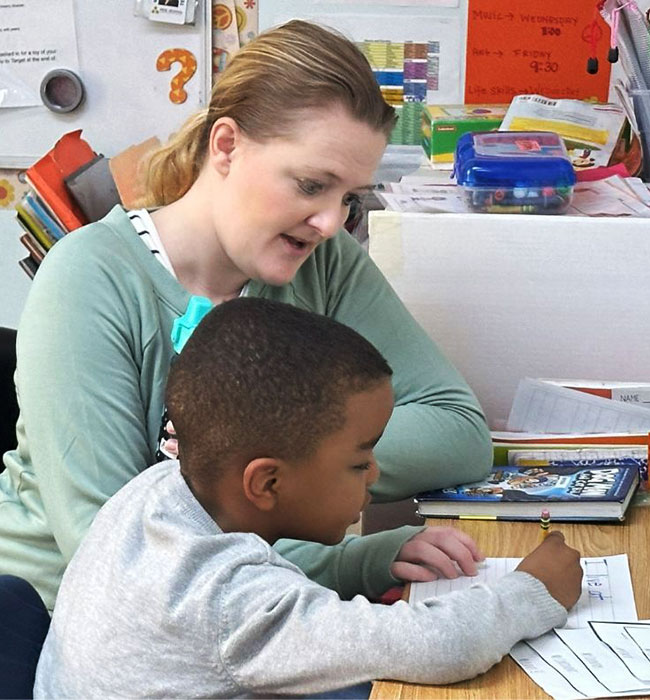
Students with communication disorders thrive when their entire educational environment supports and reinforces communication development. Rather than isolating speech therapy as a separate service, we weave communication goals throughout the academic day, creating natural opportunities for practice and generalization.
Our educators understand that communication disorders can mask a student’s true abilities and potential. We design learning experiences that allow students to demonstrate knowledge and skills through multiple communication modalities while systematically building their communication competencies.
Integrated Communication and Speech Support Systems
Total Communication Philosophy
We embrace multiple communication modalities including speech, visual supports, assistive technology, and alternative communication methods. Students learn to use whatever communication tools work best for them while continuing to develop their speech and language skills.
Academic Integration
Communication goals are embedded within academic instruction, so students practice speech and language skills while learning content. This approach ensures that communication development supports rather than competes with academic achievement.
Social Communication Focus
Beyond basic speech and language skills, we explicitly teach social communication including conversation skills, nonverbal communication, pragmatic language use, and peer interaction strategies that are essential for relationship building and community participation.
Technology Integration
Teachers use the tools and supports that work best for each student. When a student uses a communication device provided through therapy, it is incorporated into classroom instruction to support consistent communication and participation in learning activities.
Types of Communication Challenges We Address
Articulation and Speech Sound Disorders
Students who struggle with producing clear speech sounds receive systematic instruction in sound production, phonological awareness, and speech clarity. We use multi-sensory approaches that make speech practice engaging and effective.
Language Processing and Comprehension
For students who have difficulty understanding or processing language, we provide visual supports, modified instruction, and systematic language development that builds comprehension skills progressively.
Expressive Language Delays
Students with limited vocabulary or difficulty expressing ideas receive intensive language stimulation, vocabulary development, and structured opportunities to practice expressive communication in meaningful contexts.
Alternative and Augmentative Communication
For students who cannot rely solely on speech, we implement alternative communication systems that may include picture communication, or high-tech speech-generating devices.
Our Communication Program Benefits at MDE School
Families often seek our communication and speech disorder programs when their child needs:
Daily Communication Immersion
Morning Communication Routines
Each day begins with structured communication opportunities including greetings, sharing activities, and daily planning that practice functional communication skills while building social connections with peers and teachers.
Curriculum-Based Communication Practice
Throughout academic instruction, students practice communication skills within meaningful content learning. Science experiments become opportunities for descriptive language, math problems involve communication about problem-solving strategies, and literature discussions develop comprehension and expression.
Therapeutic Communication Sessions
On-campus speech-language pathologists from Greater Atlanta Speech and Language Clinic can provide intensive therapy during the school day that directly connects to classroom communication goals, ensuring consistency and generalization of skills.
Peer Communication Opportunities
Structured peer interactions, collaborative projects, and social activities provide natural opportunities for students to practice communication skills with age-appropriate partners in supportive environments.
Technology-Enhanced Communication
Daily use of communication technology helps students develop proficiency with assistive devices while participating fully in classroom activities and social interactions.
Self-Advocacy Development
Students learn to communicate about their own needs, preferences, and goals, building the self-advocacy skills essential for future independence and success.
Frequently Asked Questions About Communication & Speech Disorders
-
We conduct communication assessments to develop individualized communication plans that build on each student’s strengths.
-
Absolutely. We encourage total communication approaches that may include speech, signs, pictures, and technology, allowing students to use whatever methods work best in different situations.
-
We implement comprehensive alternative communication systems starting with basic choice-making and progressing to complex communication using pictures, symbols, or high-tech devices as appropriate.
-
Technology is incorporated into the classroom based on each student’s needs. When a student uses a communication device, it is supported during instruction to promote consistent use and participation in daily activities.
-
We provide explicit social communication instruction, peer interaction opportunities, and confidence-building activities that help students develop meaningful relationships despite communication challenges.
Excellence in Communication and Speech Education in Marietta
MDE School’s programs combine the expertise of our educational team with the specialized services of on-campus speech-language pathologists. Our Georgia Accrediting Commission accreditation and recognition as “Best Special Needs/Learning Differences School” by My East Cobb reflect our commitment to excellence in serving students with complex communication needs.
What distinguishes our approach is our understanding that communication is not a separate skill to be taught in isolation, but the foundation that supports all learning, social connection, and personal growth. Our integrated model ensures that students develop communication competencies while accessing the full curriculum and building meaningful relationships.
MDE Vocational Academy has been life-changing. Our daughter doesn’t need traditional academics anymore at her age. She needs real-world skills. MDE is teaching her how to function independently with the hope that one day she can live outside our home and thrive with support beyond her parents.
Who We Are
MDE School is the only special education school in the Atlanta metro area supporting neurodiverse students from preschool through early adulthood. As a nonprofit private school, we provide personalized education for students with developmental delays who may not thrive in traditional settings.
Our tailored academics, enrichment programs, and life skills training empower each student to reach their full potential in a supportive, nurturing environment. When ready, students can transition seamlessly to MDE Vocational Academy on our campus, serving young adults ages 15+ with a focus on vocational, life, and social skills.
Our experienced team specializes in working with students with autism, Down syndrome, cerebral palsy, communication disorders, and other learning differences supporting each child’s academic, social, and emotional growth at their own pace.
Communication Success Starts Here
Every student deserves the opportunity to express themselves, connect with others, and participate fully in their educational community. At MDE School, we create environments where communication differences become pathways to growth rather than barriers to success.
If your child faces communication or speech challenges, our expert programs can provide the comprehensive support and innovative approaches they need to develop their communication potential. Contact MDE School today to learn more about our communication disorders programs and discover how our integrated approach can unlock your child’s ability to connect, learn, and thrive.
Located at 1517 Johnson Ferry Road in Marietta, we serve families throughout the Atlanta metro area with exceptional communication support that transforms challenges into opportunities for meaningful connection and academic success.